Which of Acumen’s four values (People, Integrity, Innovation, and Perseverance) resonates most with your work and role?
Innovation resonates with me the most. I enjoy thinking about how we can make clinical trials work better for patients while still meeting our scientific objectives. For me, the most rewarding part is finding ways to build recruitment feasibility, retention, and the patient experience into the study design from the start. Sometimes small changes can make a big difference for both patients and the success of the trial.
From your perspective, what sets our company apart in the field of Alzheimer’s research?
What sets Acumen apart for me is the sense of possibility. Alzheimer’s disease remains one of the greatest challenges in medicine, and I am inspired by Acumen’s commitment to pursuing a differentiated approach grounded in strong science.
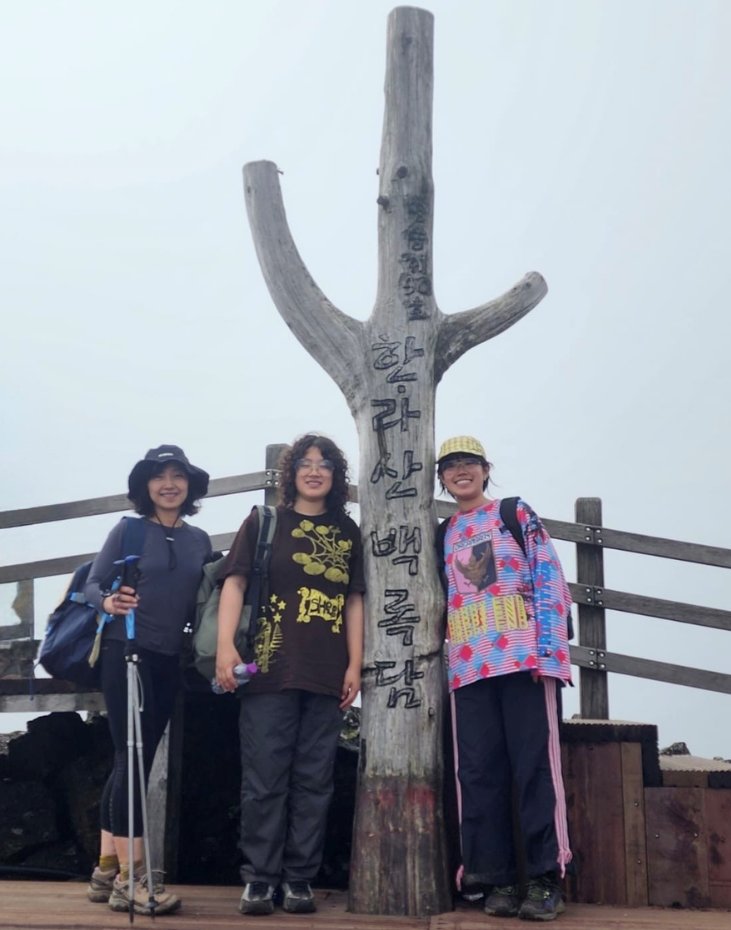
Outside of work, what are some of your hobbies or interests that you enjoy in your free time?
Outside of work, spending time with my kids is one of the best ways for me to recharge and rejuvenate. We make it a point to take a family trip together every year, creating memories and exploring new places. One of our favorite activities is hiking. This photo was taken at the summit of Mt. Hallasan in Jeju Island, a memorable adventure that we enjoyed together as a family.
What is a quote that is meaningful to you and why?
I love Audrey Hepburn and many of her quotes, but this particular one has always stayed with me.
“I believe, every day, you should have at least one exquisite moment.”
I love this quote because it reminds me to appreciate life’s simple pleasures. Sometimes it’s just sipping a good cup of coffee or watching my favorite stand-up comedian after a long day. Those simple moments are often the best ones.